Domain-Led Architecture & Build
Build & Implementation
Enterprise Implementation
Offering Overview
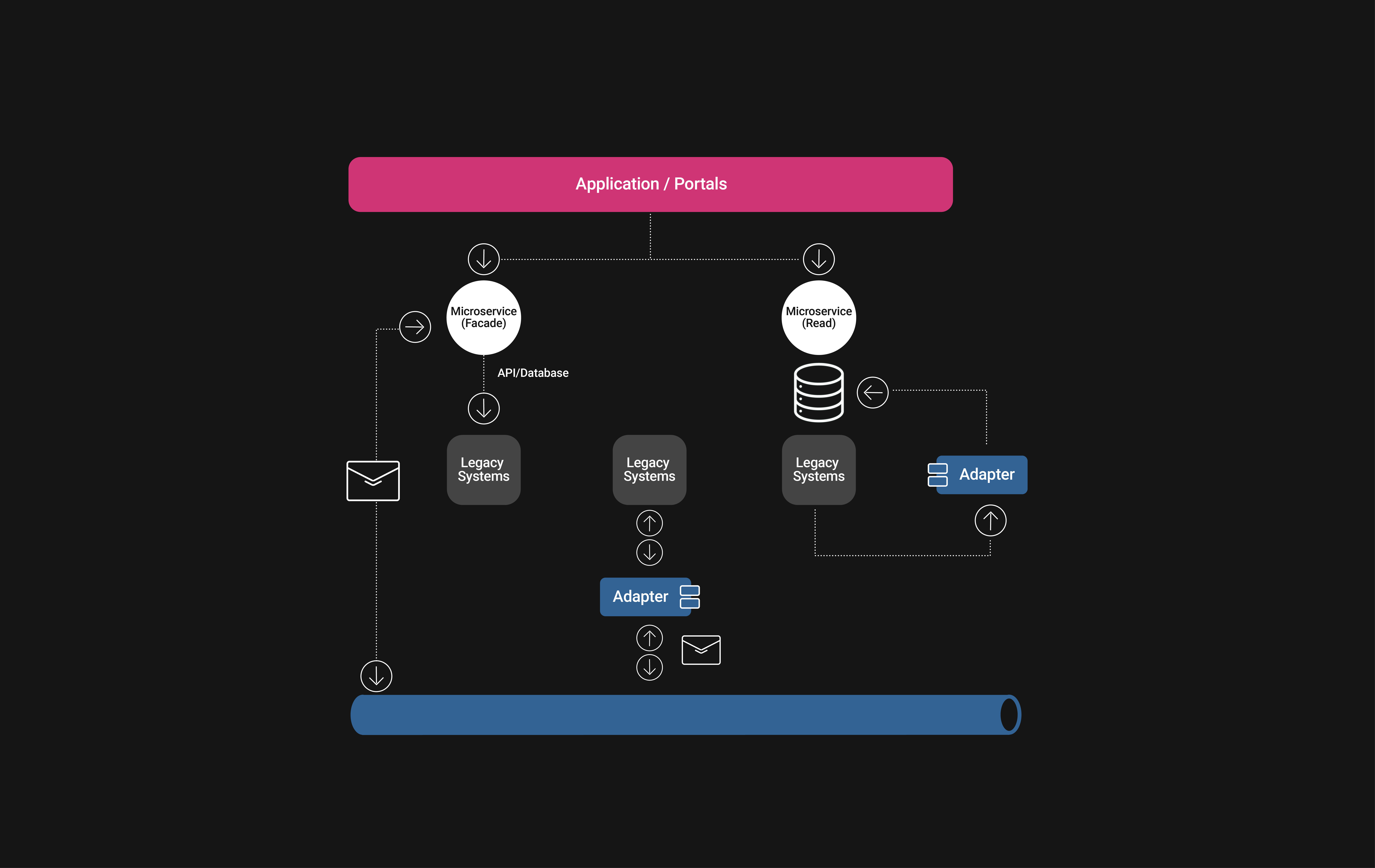
The System Integration offering focuses on connecting third-party and legacy systems to your internal platforms in a controlled, secure, and future-proof way. We identify external systems, their APIs, data stores, and integration mechanisms, and design integrations that expose required capabilities while maintaining clear architectural boundaries.
The goal is to enable seamless collaboration between systems without creating tight coupling or dependency on any single third-party platform.
We design integrations that allow:
- Legacy systems to participate in modern event-driven choreography
- Third-party services to contribute capabilities without embedding business logic
- Internal platforms to expose and consume services using modern authentication and security models
This creates a flexible integration layer that supports both current and future digital initiatives.
Value
Poorly designed integrations are a major source of fragility and technical debt in enterprise environments. Our approach prioritises resilience, flexibility, and long-term maintainability.
Key benefits include:
- Reduced vendor lock-in through well-defined integration boundaries
- Improved system resilience by insulating core platforms from third-party change
- Faster digital delivery through reusable integration patterns
- Event-driven collaboration between legacy and modern systems
- Secure, governed access to external capabilities and data
This enables organisations to extend and evolve digital capabilities without compromising the stability of core systems.
Approach section
Identify third-party systems, APIs, data sources, and integration constraints.
Define what data and behaviour should be exposed and where ownership resides.
Select appropriate patterns (API, event-driven, messaging, data sync) based on use case.
Implement modern authentication, authorisation, and governance controls.
Build and test integrations to ensure resilience, performance, and correctness.
Ensure monitoring, error handling, and support models are in place.
+ You Will Receive:
- A clear integration strategy aligned to business and technical objectives
- Secure, well-defined integrations with third-party and legacy systems
- Event-driven and API-based integration patterns
- Modern authentication and authorisation mechanisms
- Improved support for digital channels such as:
- Customer engagement services and portals
- Chat and voice-enabled capabilities
- Partner portals and external services